

Table of Contents
- Best Organic Coffee Beans for Cold Brew at Home: Quick Comparison
- Why Medium Roast Coffee for Cold Brew Works Best
- Our Top Organic Coffee Bean Picks for Cold Brew
- Whole Bean vs Pre-Ground: What to Choose for Cold Brew
- The Cold Brew Coffee Ratio and How Long to Steep Cold Brew
- USDA Organic Coffee Certification: What It Means and Why It Matters
- How to Store Organic Coffee Beans for Freshness
- Frequently Asked Questions
Last Updated: October 15, 2026
Best Organic Coffee Beans for Cold Brew at Home: Quick Comparison
The best organic coffee beans for cold brew at home are medium roasts with a coarse grind, because cold water extracts sweetness slowly and leaves bitterness behind. At Righteous Roast, we small-batch roast every lot and ship it straight to your door, so beans reach your counter fresh enough to reward a 16-hour steep.
Below, we break down eight organic options by flavor, roast level, and body, then cover ratio, steep time, and certification.
Quick Picks:
- Best Overall: Cold Brew Coffee (Medium Roast) for smooth chocolate and toffee in any batch size
- Best for Concentrate: Cold Brew Coffee (Dark French Roast), coarse grind only, built for batch brewing
- Best Single Origin for Depth: Sumatra for a syrupy body and earthy finish
| Coffee | Roast | Flavor Profile | Grind Options | Best For |
|---|---|---|---|---|
| Cold Brew Coffee | Medium | Chocolate, toffee, floral | Whole bean or ground | All-around cold brew |
| Cold Brew Coffee (Dark French) | Dark French | Deep, rich, consistent | Coarse only | Concentrate and batch brewing |
| Sumatra | Medium | Dark chocolate, earthy | Whole bean or ground | Heavy, syrupy body |
| Brazil Santos | Medium | Cocoa, smooth | Whole bean or ground | Everyday drinking |
| Guatemala Antigua | Medium | Dark chocolate, fruit | Whole bean or ground | Bright, lively cups |
| Colombia Medellín | Medium | Dried orange, berry | Whole bean or ground | Fruity sweetness |
| Mexico Chiapas & Oaxaca | Medium | Chocolate, cinnamon | Whole bean or ground | Cozy, spiced notes |
| Peru | Medium | Salted caramel, citrus | Whole bean or ground | Silky, easy drinking |
Why Medium Roast Coffee for Cold Brew Works Best
Medium roast coffee for cold brew hits the sweet spot between extraction and balance. Cold water pulls flavor slowly, so a lighter roast can taste thin and grassy while a very dark roast turns ashy and sharp.

That is why most of our cold brew lineup sits at medium: the chocolate, toffee, and cocoa notes read as smooth and low-acid once chilled.
Our Top Organic Coffee Bean Picks for Cold Brew
Each pick below is a whole bean or ground organic option from our small-batch lineup, all priced at $21.99 per bag and available in every size we offer.
A quick note on value.
Chocolatey and Comforting
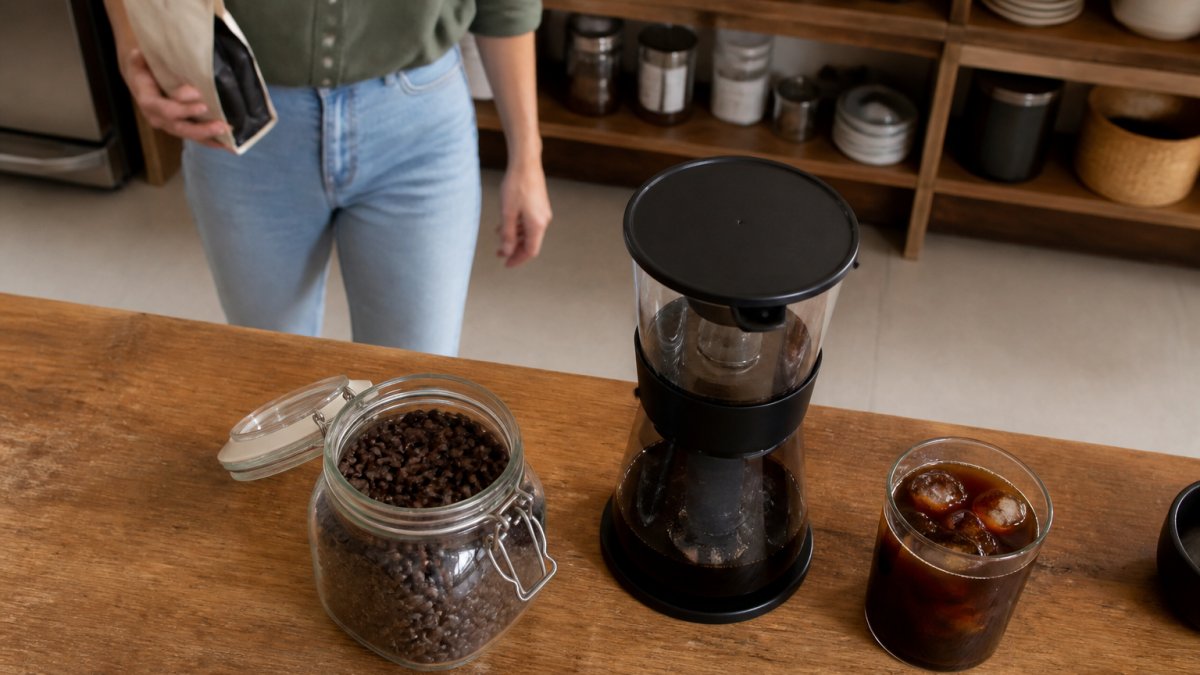
Cold Brew Coffee (Medium Roast): Smooth Chocolate and Toffee. Our flagship cold brew pick is a medium roast blend built for cold extraction, with smooth chocolate, toffee, and a light floral tone that stays clean over ice.
Brazil Santos Single Origin: Cocoa Notes and Everyday Balance. Brazil Santos is an elegant, smooth medium roast with cocoa notes that tastes great black or with cream.
Fruity and Bright
Guatemala Antigua Single Origin: Dark Chocolate and Bright Fruit. Guatemala Antigua brings dark chocolate depth with bright fruit and a touch of butterscotch.
Colombia Medellín Single Origin: Dried Orange and Berry. Colombia Medellín leans fruity, with dried orange and berry notes balanced by a chocolate finish.
Peru Single Origin: Salted Caramel and Silky Sweetness. Peru closes the fruity-leaning group with salted caramel sweetness, a silky mouthfeel, and a clean citrus lift.
Bold and Concentrate-Ready
Cold Brew Coffee (Dark French Roast): Bold and Built for Batch Brewing. This dark French roast is blended specifically for cold brew and sold in a very coarse grind only, because that is what the method wants. It is 100% coffee with no additives, designed for concentrate, iced coffee, and batch brewing, and sizes run up to 2lb for anyone making a week of concentrate at once.
Heavy, Low-Acid, and Syrupy
Sumatra Single Origin: Syrupy Body and Earthy Depth. Sumatra is the pick when you want a heavier cup. The wet-hulled process gives it a syrupy body with dark chocolate, dried fruit, and earthy notes plus a long finish. Medium acidity keeps it smooth even after a long steep, so reach for it if bright coffees taste harsh on an empty stomach.
How to Match a Bean to Your Taste
If you are unsure where to start, work backward from how you already drink coffee. With cream and sugar, lean chocolatey, the medium roast blend or Brazil Santos. Black and wanting complexity, go fruity, Guatemala, Colombia, or Peru. For a concentrate that stands up to milk and ice, go bold, the Dark French. If acidity is your concern, Sumatra is the lowest-acid pick.
Whole Bean vs Pre-Ground: What to Choose for Cold Brew
Whole bean wins for flavor, pre-ground wins for convenience, and cold brew is forgiving enough that the gap is smaller than you might expect.
Cold Brew Coffee (Medium Roast) →
The one rule that matters: never use a fine grind for cold brew. Fine particles slip through filters, cloud the brew, and turn the cup bitter and muddy. A coarse grind, roughly the texture of sea salt, keeps extraction even and the finished brew clean.
The Cold Brew Coffee Ratio and How Long to Steep Cold Brew
The standard cold brew coffee ratio is 1 part coffee to 4 parts water by weight for a concentrate, or 1 to 8 for ready-to-drink strength.
A simple starting point for a home batch:
- Weigh 100g of coarsely ground coffee into a large jar or pitcher
- Add 400g of filtered water for a concentrate, or 800g for ready-to-drink
- Stir gently to saturate all the grounds, then cover
- Steep 12-18 hours at room temperature, or up to 24 hours refrigerated
- Strain through a fine mesh sieve, then a paper filter for a cleaner cup
- Dilute the concentrate 1:1 with water or milk over ice, and adjust from there
If the result tastes weak, add more coffee next time rather than steeping longer. Past 24 hours, you pull bitterness and little else. Filtered water matters more than most people think, since tap water minerals can flatten the flavor.
USDA Organic Coffee Certification: What It Means and Why It Matters
USDA Organic coffee certification means the beans were grown on farms that meet the USDA's organic standards, with synthetic fertilizers and most synthetic pesticides restricted and verified through an accredited certifier. The USDA National Organic Program overview explains how those standards are set and enforced, and the USDA Organic certification and accreditation details walks through the inspection process.
Here is the part most buying guides skip: not every bag that says "organic" is certified, and the difference matters when you pay a premium.
How to Verify a Bag in About 30 Seconds
- Look for the seal. The USDA Organic seal is the clearest signal. If it is missing, the word "organic" on the front is doing less work than you think.
- Find the certifier name. Certified products name the certifying agent, often a third-party organization accredited by the USDA, somewhere on the package. A named certifier is a verifiable paper trail; a missing one is a red flag.
- Check the ingredient statement. For coffee, the ingredient should simply read "organic coffee" or "organic green coffee beans." Flavored or blended products should show organic status for each component.
- Watch for vague language. Phrases like "sustainably sourced," "responsibly grown," "shade grown," or "eco-friendly" are marketing terms, not regulated organic claims. They may describe real practices, but they are not the same as certification and are not independently verified against the USDA standard.
Why This Matters More for Cold Brew
Cold brew extracts the bean slowly and completely over 12 to 24 hours, which is why the source of the bean deserves a closer look than it might for a quick hot pour. A certified organic bean gives you a documented, auditable chain rather than a claim you take on faith, the easiest way to tell a genuinely organic bag from one that is simply priced like it.
How to Store Organic Coffee Beans for Freshness
Store organic coffee beans in an airtight container, away from light, heat, and moisture, and buy only as much as you will brew within a few weeks. Whole bean holds its flavor far longer than ground, so if you drink cold brew regularly, a grinder pays for itself quickly.
A few habits that keep a bag tasting fresh:
- Keep beans in the original sealed bag or a vacuum container, not the fridge door
- Buy smaller quantities more often rather than a large bag you cannot finish
- Check the roast date, not just the best-by date, and brew within a few weeks of roasting
Cold brew rewards good beans more than almost any other method, and the gap between a stale grocery bag and a fresh small-batch roast is obvious in the glass.
Frequently Asked Questions
Should you use dark or medium roast coffee for cold brew?
Dark roast tends to produce a bolder, more intense cup with low acidity, while medium roast offers a smoother, more balanced flavor. For a classic cold brew with chocolate and toffee notes, medium roast works well. If you prefer a deep, rich concentrate for mixing with milk or water, a dark French roast is a solid choice. Both roast levels brew well cold; the decision comes down to whether you want smooth and nuanced or bold and straightforward.
What coffee-to-water ratio works best for homemade cold brew?
A common starting point is 1 part coffee to 4 parts water by weight for a concentrate you dilute before drinking. For a ready-to-drink cold brew, try 1 part coffee to 8 parts water. Adjust based on your taste: more coffee means a stronger, more intense brew. Use filtered water and a coarse grind to keep the extraction even and the final cup smooth.
How long should coffee steep for cold brew?
Most cold brew recipes call for 12 to 18 hours of steeping at room temperature or in the refrigerator. Steeping for 12 hours gives you a lighter, smoother result, while 18 hours pulls out deeper chocolate and caramel notes. Going beyond 24 hours can introduce bitterness. Start with 16 hours, taste the concentrate, and adjust your next batch based on how strong you like it.
Are whole beans better than pre-ground coffee for cold brew?
Whole beans stay fresh longer because the oils and aromas are protected until you grind them. For cold brew, you want a coarse grind, which you can control precisely with a burr grinder at home. Pre-ground coffee works in a pinch, but it loses flavor faster after opening. If you buy pre-ground, choose a coarse grind option and use it within a week or two for the best results.
Does USDA organic coffee certification guarantee better taste in cold brew?
USDA Organic certification verifies how the coffee was grown and processed, not how it tastes. Organic coffee beans come from farms that avoid synthetic pesticides and fertilizers, which many drinkers prefer for health and environmental reasons. Taste depends more on roast level, bean origin, and freshness. You can find organic beans with chocolate, fruity, or caramel notes just as you would with conventional coffee, so flavor and certification are separate considerations.