

Table of Contents
- What Makes an Artisanal Tea Subscription Worth Your Money
- How to Choose a Tea Subscription That Matches Your Taste
- Loose Leaf Tea Subscription Box Options and What Sets Them Apart
- Sustainable Tea Sourcing Practices and Why They Matter
- Cost Per Serving: Understanding the Real Value
- Brewing Equipment and Accessories That Complete Your Experience
- Conclusion: Your Next Cup Starts Here
- Frequently Asked Questions
Last Updated: September 21, 2026
What Makes an Artisanal Tea Subscription Worth Your Money
An artisanal tea subscription delivers curated, small-batch loose leaf tea with flavor profiles and sourcing transparency that mass-market tea cannot match. Tea enthusiasts increasingly seek quality over convenience, willing to invest in handpicked blends from specific regions and harvests. The real question is whether the experience justifies the premium.

Authentic artisanal subscriptions prioritize sourcing stories, brewing guidance, and discovery over volume. You're paying for direct access to small producers, seasonal varietals, and flavor notes that evolve year to year. Most subscriptions deliver curated, small-batch loose leaf tea with flavor profiles and sourcing transparency that mass-market tea cannot match.
The decision hinges on three factors: your willingness to explore new flavors, your commitment to proper brewing, and whether you value discovery over bulk purchasing savings. A subscription eliminates decision paralysis, someone else curates options based on your preferences.
How to Choose a Tea Subscription That Matches Your Taste
The right artisanal tea subscription depends on your brewing habits, caffeine preferences, and flavor adventure level. Identify your baseline: Are you a black tea drinker? Do herbal infusions appeal to you? Are you exploring oolong and pu-erh? Your answer determines which subscription aligns with your needs.
Assess your equipment. If you own a quality infuser, loose leaf tea is immediately accessible. Without one, budget $15-30 for a reliable brewing vessel. Some subscriptions include starter equipment; others assume you're already equipped.
Consider frequency and commitment. Monthly subscriptions offer maximum flexibility; quarterly plans reduce shipping but require larger commitments. Choose what works for your lifestyle.
Evaluate customization options. The best subscriptions let you skip months, swap selections, or adjust frequency without penalty. Look for transparent cancellation policies and the ability to pause rather than cancel.
| Selection Factor | What to Look For | Red Flag |
|---|---|---|
| Sourcing transparency | Named origins, harvest dates, producer info | Vague "premium blends" with no origin details |
| Brewing guidance | Specific temps, steeping times, leaf-to-water ratios | Generic "steep to taste" instructions |
| Customization | Skip months, swap teas, adjust frequency | Fixed selections, no flexibility |
| Cancellation policy | Pause or cancel anytime, no penalties | Auto-renewal with difficult cancellation process |
| Starter equipment | Infuser or brewing vessel included or recommended | Assumes you already own proper equipment |
Loose Leaf Tea Subscription Box Options and What Sets Them Apart
The loose leaf tea subscription category has expanded dramatically, but quality varies significantly. The best approach centers on sourcing directly from ethical producers, offering seasonal varietals, and providing detailed tasting notes.
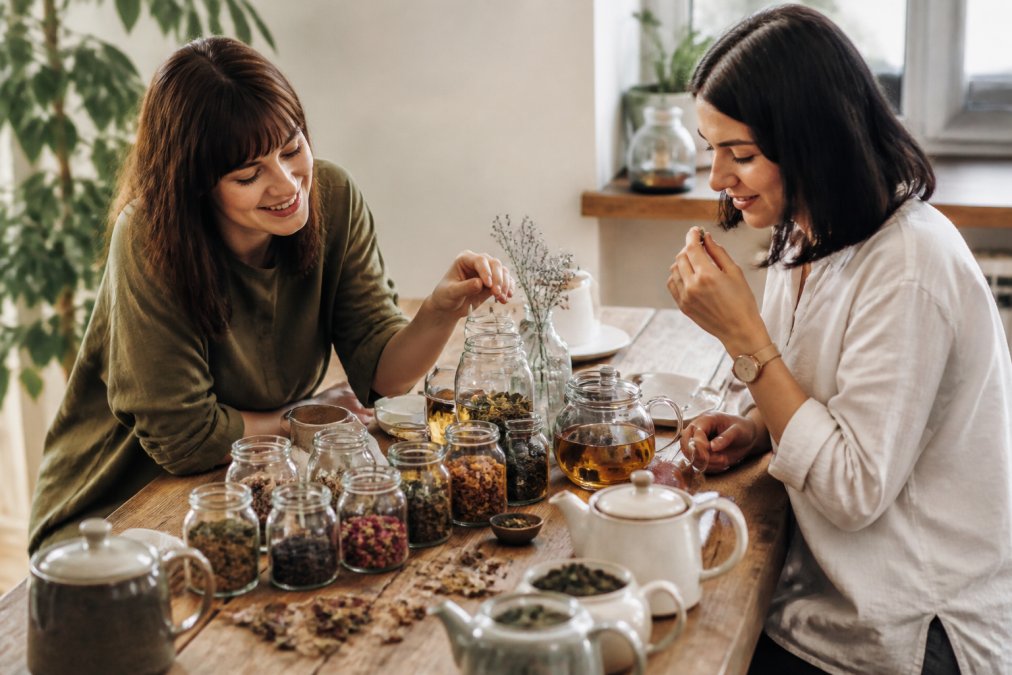
Black tea selections like English Breakfast (Kenya and Assam) and Earl Grey (Ceylon OP) deliver bold, malty character. Jasmine Green Loose Leaf Tea offers a medium-bodied, silky cup with fruity floral notes, excellent for multiple steepings.
Herbal blends like Peach Paradise and Mango Treat are naturally caffeine-free, crafted from botanicals. Rooibos-based blends like Apple Cider Rooibos provide cozy, spiced character without caffeine.
The standout feature across many loose leaf options is the ability to steep multiple times. Quality loose leaf leaves unfurl gradually, releasing flavor across multiple steepings. This directly impacts cost-per-serving and the overall value proposition of a subscription.
Sustainable Tea Sourcing Practices and Why They Matter
Sustainability in tea production directly affects flavor, freshness, and long-term sourcing. Sustainable farming practices, avoiding synthetic pesticides, maintaining soil health, respecting water resources, develop more complex flavor profiles and keep regions productive.
Prioritize sourcing from producers who embrace fair trade and organic cultivation. Jasmine Green from China uses traditional hand-picking methods; Masala Chai features Assam black tea paired with warming spices.
Loose leaf tea requires less packaging than bagged alternatives. Ask whether your subscription uses compostable pouches, recyclable materials, or refillable options.
Cost Per Serving: Understanding the Real Value
Cost-per-serving calculations reveal why artisanal subscriptions often deliver better value than they initially appear, when you account for brewing efficiency, equipment investment, and consumption patterns.
The Math: Premium Loose Leaf vs. Alternatives
A 3-ounce package of premium loose leaf tea at $17.99 yields approximately 12-15 servings with multiple infusions.
This breaks down to roughly $1.20-$1.50 per serving for premium, ethically sourced tea.
The subscription premium buys curation, discovery, and sourcing transparency.
Powdered and Specialty Teas Shift the Economics
Matcha and powdered teas compress the cost-per-serving calculation. A 1-ounce container at $22.00 yields 30-40 servings at $0.55-$0.75 per serving.
Herbal blends yield 15-20 servings per 2-ounce package at $0.65-$0.85 per serving, with strong value.
The Equipment Investment Amortization
Proper brewing equipment is essential for realizing per-serving savings. A basic infuser ($8-15), temperature-controlled kettle ($30-60), and infuser pot ($20-40) total $40-100. Amortized across 300 cups annually, that's $0.13-$0.33 per cup; over two years, $0.07-$0.17 per cup. This is negligible compared to $1.20-$1.50 per-serving tea cost.
Subscription Frequency and Shipping Economics
Real-World Consumption Scenarios
Three consumption profiles:
Jasmine Green Loose Leaf Tea →
The Hidden Value: Sourcing Transparency and Consistency
Artisanal tea providers that source directly from producers and publish harvest dates, elevation, and processing methods eliminate sourcing uncertainty. This consistency eliminates trial-and-error costs of discovering reliable vendors and preferred flavor profiles.
Brewing Equipment and Accessories That Complete Your Experience
Brewing equipment directly impacts flavor extraction and cost-per-serving. Different tea types and subscription tiers demand different equipment investments.
The Equipment Hierarchy: What You Actually Need
Start with minimum viable setup: an infuser ($8-15) and kettle ($15-25), totaling $25-40. However, "minimum viable" is not optimal, subscription tiers determine ideal equipment.
Tier 1: Casual Subscribers (2-3 cups/week)
You need: a simple infuser ($10-15) and basic kettle ($15-25). Optional: a small infuser pot ($20-30) if brewing daily. Avoid expensive temperature-controlled kettles or ceremonial equipment.
Tier 2: Regular Subscribers (5-7 cups/week)
You need: a quality infuser pot ($25-40) and standard kettle ($15-25). Strongly recommended: a gooseneck kettle ($25-50) for precise pouring control. Consider: a thermometer ($5-10) or temperature-display kettle ($30-50). Different teas brew optimally at different temperatures.
Tier 3: Enthusiasts (10+ cups/week, multiple tea types)
You need: a gooseneck kettle with temperature control ($40-80), quality infuser pot ($30-50), and multiple infusers ($30-50). Recommended: a matcha whisk ($10-20) and small scale ($15-30) for precise ratios. Consider: a gaiwan ($15-30) for oolong and pu-erh exploration.
Equipment-to-Tea-Type Matching
Match infusers to tea types: any infuser for black teas and herbals; fine-mesh for green and white teas; gaiwan or infuser pot for oolong and pu-erh; bamboo whisk for matcha. If your subscription includes multiple types, invest in two infusers ($20-30) to prevent flavor cross-contamination.
Storage: The Overlooked Equipment Investment
Loose leaf tea deteriorates when exposed to light, moisture, and air. Airtight glass containers kept in a cool, dark cupboard preserve flavor. If your tea arrives in resealable pouches, transferring the tea to glass for long-term storage can extend its life and ensure consistent flavor across multiple steepings.
Invest in small glass jars with airtight lids. Label them with tea name and purchase date. This organization system can prevent the common mistake of forgetting which tea is which or brewing stale tea because you can't see what's in the pouch.
Avoid: plastic containers (they can absorb odors) and clear glass stored in direct sunlight (light can degrade tea quality). Opaque glass or glass stored in a cupboard is ideal.
The Amortization Reality
Proper equipment adds to the amortized cost, which is negligible compared to the per-serving tea cost.
Consider it a one-time investment that unlocks the full potential of your subscription and ensures you're extracting the flavor you're paying for.
Equipment as a Subscription Differentiator
Conclusion: Your Next Cup Starts Here
Choosing the right artisanal tea subscription transforms tea from a convenience item into a ritual worth your time and attention. The difference between mass-market tea and handpicked, ethically sourced loose leaf is immediate, in flavor complexity, brewing consistency, and the satisfaction of knowing where your tea originated.
The challenge most tea drinkers face isn't finding premium tea; it's finding a subscription that respects their preferences, values sustainability, and delivers genuine discovery without forced commitment.
Frequently Asked Questions
Are artisanal tea subscription boxes worth the cost compared to grocery store tea?
Artisanal loose leaf teas offer noticeably fresher flavor profiles, often single-origin or small-batch blends that grocery stores don't carry. You're paying for quality sourcing, handpicked botanicals, and tasting notes that guide your brewing. Most find the cost-per-serving comparable to or lower than other premium beverages, especially when loose leaf allows multiple steepings per serving. The real value lies in discovery, sampling curated flavors you'd never find locally.
What should I look for in a high-quality loose leaf tea subscription box?
Prioritize loose leaf format over bagged tea, as it delivers better flavor extraction and multiple steepings. Check for sourcing transparency, ethical, fair trade, or organic certifications matter. Look for detailed tasting notes and steeping instructions so you brew correctly. Packaging should protect freshness; airtight seals and quick shipping are critical. Sample sizes (like 3oz portions) let you explore without waste.
How do sustainable tea sourcing practices affect the quality and taste of your tea?
Sustainable sourcing, fair trade, organic farming, and direct relationships with growers, typically produces higher-quality tea because farmers invest in proper cultivation rather than maximizing yield. Hand-picked leaves and careful processing all enhance flavor complexity. Small-batch handling preserves delicate tasting notes. Ethical sourcing also ensures tea reaches you fresher, as sustainable operations often prioritize direct shipment.
Can I customize an artisanal tea subscription based on my flavor preferences and caffeine needs?
Righteous Roast offers a curated selection of tea by type (black, green, herbal) and flavor profile (floral, fruity, spiced), with options for caffeine preference (caffeinated, caffeine-free, low-caffeine options like hojicha). This allows you to choose teas that match your current taste or energy needs, whether you want bold morning teas or calming evening blends.