

Last Updated: October 23, 2026
Quick Summary
Why coffee tastes sour comes down to water not spending enough time pulling flavors from the grounds, leaving an incomplete taste, a problem called under-extraction that's usually caused by grind size, water temperature, or brew time being too low.
- Sour coffee usually tastes sharp and tangy due to under-extraction, not the bean quality itself.
- Ideal water temperature is between 195 and 205 degrees Fahrenheit for most brewing methods.
- The fastest fix is to increase brew time by 30 seconds or make your grind finer by one notch.
- Coffee beans start losing flavor within two weeks of roasting and taste noticeably worse after four weeks.
- Grind size is the single biggest lever to control extraction, coarser grinds extract too quickly and cause sourness.
Table of Contents
- Why Your Coffee Tastes Sour: The Extraction Problem
- Understanding Under-Extracted Coffee
- How Coffee Grind Size Affects Sourness
- Water Temperature and Brew Time Impact
- How to Fix Sour Coffee: Step-by-Step
- How to Store Whole Bean Coffee Properly
- Sour vs. Acidic: Learn the Difference
- Frequently Asked Questions
Why Your Coffee Tastes Sour: The Extraction Problem
If your morning cup tastes sharp, tangy, or mouth-puckering instead of smooth and balanced, you're likely dealing with under-extracted coffee, and understanding why coffee tastes sour comes down to water not spending enough time pulling flavors from the grounds, leaving an incomplete taste.
The good news: this is one of the easiest coffee problems to fix. Sour coffee usually comes down to grind size, water temperature, brew time, and coffee freshness.
When coffee grounds meet hot water, dissolved solids transfer from the bean into your cup. Too little contact time gives you sourness; too much gives you bitterness.
Understanding Under-Extracted Coffee
Under-extracted coffee hasn't had enough contact with hot water to fully develop its flavor.
Think of extraction like steeping tea: pull the bag out after 10 seconds and the water tastes thin; leave it 3 minutes and you get full, balanced flavor. Coffee works the same way.
The issue isn't the bean itself but how much soluble material reaches your cup.
Common signs of under-extracted coffee include:
- Sharp, sour, or tangy taste
- Thin mouthfeel
- Lack of sweetness or body
If you're experiencing these, your brew ratio, grind size, or contact time needs adjustment.
How Coffee Grind Size Affects Sourness
Grind size is the single biggest lever you have to control extraction, but "go finer" only works if your grinder actually produces the particle size you think it does.
Finer grounds have more surface area for water to contact; coarser grounds have less, which directly affects extraction speed.
The relationship is straightforward: coarser grind = faster flow = under-extraction = sourness.
Different brewing methods need different grind sizes:
- Espresso: very fine (like powder)
- Pour-over: medium-fine
- Cold brew: very coarse
Dialing in the Right Grind
Dialing in means adjusting your grinder until the coffee tastes balanced and sweet. Start with the grind size recommended for your method, then taste. If it's sour, go finer by one notch, brew again, and keep adjusting in small increments until sourness disappears and sweetness emerges.
This usually takes 3 to 5 brews. Don't jump multiple notches at once, small changes make a big difference. Once you find the right grind, note the dial position so you can replicate it.
The Grinder Problem Most Guides Skip
Here's what almost no troubleshooting article covers: a grinder can be set to "fine" and still produce a sour cup if the burrs are dull, misaligned, or scaled up. Sourness isn't only about the dial number, it's about whether the particles are uniform.
- Dull burrs. Worn burrs crush and smear beans instead of cutting them cleanly, producing dust-fine and boulder-coarse particles in the same dose. The fines over-extract and turn bitter while the boulders under-extract and stay sour, a cup that tastes both sour and harsh at once points to a burr problem, not a grind-setting problem.
- Burr misalignment. If the upper and lower burrs aren't parallel, one side of the grind chamber produces coarser particles than the other. No dial setting fixes this because the grinder produces two grind sizes at once. Many hand grinders and entry-level electric grinders drift out of alignment over time.
- Scale buildup. Mineral scale on burrs or in the grind path changes how beans are sheared and can clog the exit chute, causing inconsistent feed and uneven particle size.
A practical check: run a small dose through the grinder and rub the grounds between your fingers.
If you've gone several notches finer and the coffee is still sour, stop adjusting the dial and inspect the grinder. Clean the burrs, check for alignment, and replace worn burrs if the manufacturer recommends it. Grind size is the lever, but burr condition is the hand on the lever.
Water Temperature and Brew Time Impact
Water temperature and brew time work together to control extraction. Hotter water extracts faster. Longer brew time also increases extraction.
The ideal water temperature for most coffee is between 195 and 205 degrees Fahrenheit. If your water is cooler than 195 degrees, extraction slows dramatically and sourness appears.
Brew time varies by method:
- Espresso: 25 to 30 seconds
- Pour-over: 3 to 4 minutes
- Drip machine: 5 to 10 minutes
If your brewer cools the water as it sits, or your water isn't hot enough, sourness is almost guaranteed.
The Water Chemistry Angle Most Guides Miss
Temperature and time get all the attention, but water itself is roughly 98 percent of your cup.
Minerals drive extraction. Magnesium and calcium bind to flavor compounds in the grounds and pull them into solution.
Alkalinity buffers acidity. Alkalinity (carbonate and bicarbonate) neutralizes coffee's acids. High alkalinity mutes brightness and flattens flavor; very low alkalinity lets acidity come through unchecked, which some drinkers perceive as sourness.
A practical starting point. Aim for moderate hardness and moderate alkalinity rather than extremes.
Temperature and time remain the first things to check because they're free to adjust. But when they're already in range and sourness persists, look at the water. It's the variable hiding in plain sight.
How to Fix Sour Coffee: Step-by-Step
Fixing sour coffee means testing one variable at a time: change one thing, brew, taste, and evaluate to identify exactly what's causing the problem.
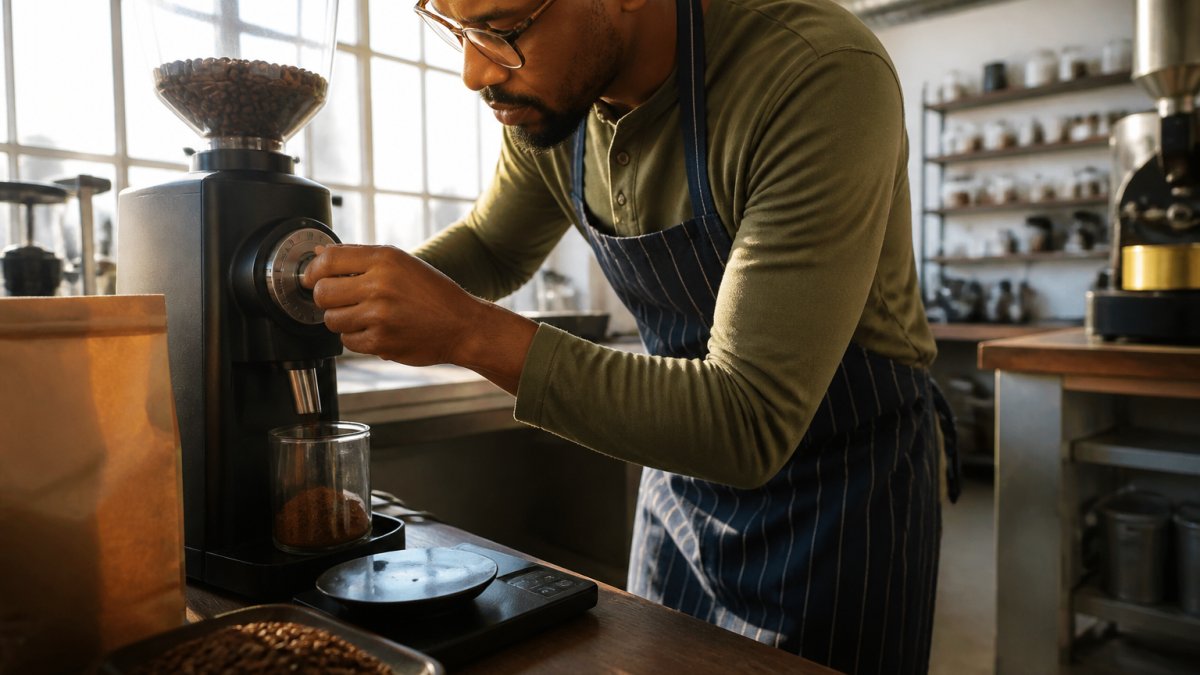
The steps below work for any brewing method. Start at the top and work your way down until your coffee tastes balanced and sweet.
Breakfast Blend — Light Roast →
Step 1: Check Your Coffee Bean Freshness
Stale coffee tastes sour and flat. Coffee starts losing flavor within two weeks of roasting and tastes noticeably worse after four.
Check the roast date on your bag: older than four weeks and the beans may be too stale. Whole bean stays fresher longer than ground, but both lose quality over time.
If your beans are old, buy fresh ones. Freshness makes a huge difference. Fresh coffee is one of the easiest ways to eliminate sourness.
Step 2: Adjust Your Grind Size
If your beans are fresh, start here: make your grind finer by one notch, brew normally, and taste.
If it tastes better, you've found part of the problem, keep the new grind size and move to Step 3.
If it still tastes sour, go one notch finer and try again. Most home brewers find the right grind within two or three adjustments.
Step 3: Increase Brew Time and Contact
If adjusting grind didn't fully solve it, add 30 seconds to your normal brew time and taste.
For pour-over, pour more slowly or let the water sit longer on the grounds; for drip machines, accept a longer cycle; for espresso, adjust tamping pressure or grind to slow the shot.
Small increases in contact time often eliminate sourness without creating bitterness.
Step 4: Raise Water Temperature
Check your water temperature with a thermometer. If it's below 195 degrees Fahrenheit, heat it up.
Most home brewers can raise water temperature by heating the kettle to a rolling boil and waiting 30 seconds before pouring, around 200 degrees, which is ideal.
If your coffee machine has a built-in heater, check for a temperature setting. Some default to only 190 degrees; raising it to 200 often fixes sourness immediately.
Step 5: Fix Your Brew Ratio
Brew ratio is coffee to water. A common starting point is 1:16 by weight. Too much water relative to coffee dilutes extraction and sourness appears.
Measure coffee and water by weight on a kitchen scale. Start at 1:16; if it still tastes sour, try 1:15, less water means more concentrated extraction and often less sourness.
How to Store Whole Bean Coffee Properly
Stale coffee tastes sour; proper storage keeps beans fresh and flavorful for weeks.
Don't store coffee in the refrigerator or freezer, temperature fluctuations and moisture speed up staleness.
Use coffee within four weeks of the roast date for best flavor; after that it's still drinkable but loses complexity and brightness.
Grinding coffee speeds up staleness. Grind only what you need for each brew. Whole beans stay fresh much longer than pre-ground coffee.
| Storage Method | Freshness Duration | Best For |
|---|---|---|
| Sealed bag with valve | 3-4 weeks | Unopened coffee |
| Airtight opaque jar | 2-3 weeks | Home use |
| Original bag (opened) | 1-2 weeks | Quick consumption |
| Pre-ground in bag | 1-2 weeks | Convenience only |
Sour vs. Acidic: Learn the Difference
Many home brewers confuse sourness with acidity. They're different, and understanding the difference helps you fix the real problem.
Acidity is desirable: the brightness, liveliness, and complexity of a good cup.
Sourness is the sharp, tangy, mouth-puckering taste of under-extraction, unpleasant and flat.
Bright, complex, slightly fruity coffee is acidity, that's good.
Many specialty coffees are naturally more acidic.
Our Ethiopia Natural Coffee from the Sidama Zone is a great example.

If you prefer less acidity, choose darker roasts or blends. Our Breakfast Blend is a light roast with gentle nutty sweetness and soft fruit notes.
Frequently Asked Questions
Does sour coffee always mean it's under-extracted?
Usually, yes. Under-extracted coffee tastes sour because the water didn't pull enough soluble compounds from the grounds. However, stale beans or incorrect storage can also create sourness. Check your bean freshness first, if your coffee has been open for more than two weeks or stored in a warm place, that's likely the culprit. If beans are fresh, sourness points to extraction issues: grind size too coarse, water temperature too low, or brew time too short.
How can I tell the difference between sour and acidic coffee?
Acidic coffee tastes bright and tangy, with pleasant citrus or fruit notes. Sour coffee tastes sharp, mouth-puckering, and unpleasant, like green apple or vinegar. Acidity is a desirable flavor profile, especially in light roasts and single-origin coffees like our Kenya or Tanzania varieties. Sourness is a flaw that means extraction went wrong. If your coffee has a clean, lively flavor with fruit notes, that's good acidity. If it tastes flat, sharp, and unbalanced, that's sourness from under-extraction.
What's the fastest fix for sour coffee?
Start by making your grind finer. Finer grounds increase contact time with water, pulling more soluble compounds and reducing sourness. If that doesn't work, raise your water temperature to 195-205°F. These two changes fix most sour coffee problems. If you're using whole bean coffee, also check the roast date, beans older than three weeks may taste sour no matter what you do.
Can stale coffee beans taste sour?
Yes. As beans age, they lose CO2 and aromatic compounds, often developing a sour, stale, or flat taste. Beans are freshest within 2-3 weeks of the roast date. Store whole bean coffee in an airtight container away from light, heat, and moisture to preserve freshness. If your coffee has been sitting open for more than two weeks, sourness is likely from staleness, not extraction.
Sour coffee almost always comes from under-extraction. Fix your grind size, water temperature, brew time, and bean freshness, and you'll taste the difference immediately. Start with fresh, ethically sourced beans from Righteous Roast, dial in your grind, and brew with water between 195 and 205 degrees Fahrenheit. Within a few brews, you'll have balanced, sweet coffee instead of that sharp, unpleasant sourness. The best part? Once you nail these variables, making great coffee becomes automatic.
