

Table of Contents
- What Makes Artisanal Coffee Different From Supermarket Coffee
- The Roasting Process: How Drum Roasting Creates Superior Flavor
- Ethical Sourcing in the Coffee Industry: What You're Actually Paying For
- Freshness and Bean Quality: The Scientific Markers That Matter
- What Is the 15-15-15 Rule for Coffee and Why It Matters
- Cost-Benefit Analysis: Is the Premium Price Justified
- Reducing Waste and Getting the Most From Your Purchase
- Conclusion
- Frequently Asked Questions
Last Updated: September 27, 2026
What Makes Artisanal Coffee Different From Supermarket Coffee
The difference between artisanal coffee and what you find on supermarket shelves comes down to freshness, sourcing, and roasting philosophy. Artisanal coffee is typically roasted in small batches within days of being packaged, while commodity coffee sits in warehouses for months. At Righteous Roast, we focus on single-origin beans from ethical sources, which means you know exactly where your coffee comes from and how it was grown.
Supermarket coffee is often a blend of lower-grade beans roasted months ago. The oils oxidize, the aromatics fade, and by the time you brew it, you're tasting staleness more than flavor. Artisanal roasters, by contrast, treat coffee like wine: origin matters, terroir matters, and the roast date is stamped on the bag.
The sensory difference is immediate. A fresh artisanal coffee has complexity, layers of flavor notes that emerge as the cup cools. You might taste cocoa, fruit, or honey depending on the origin. Supermarket coffee tastes flat by comparison because those volatile compounds have already degraded.
This isn't snobbery. It's chemistry. Fresh coffee contains hundreds of aromatic compounds that begin breaking down the moment beans are roasted. After two weeks, you've lost meaningful flavor complexity. After two months, you've lost most of it.
The Roasting Process: How Drum Roasting Creates Superior Flavor
Drum roasting is the method most specialty roasters use because it allows precise control over temperature and time, which directly shapes flavor development. The beans tumble inside a rotating drum heated to around 400°F. As they heat, they release moisture and oils, and their color changes from green to light brown to dark brown depending on how long they stay in the drum.
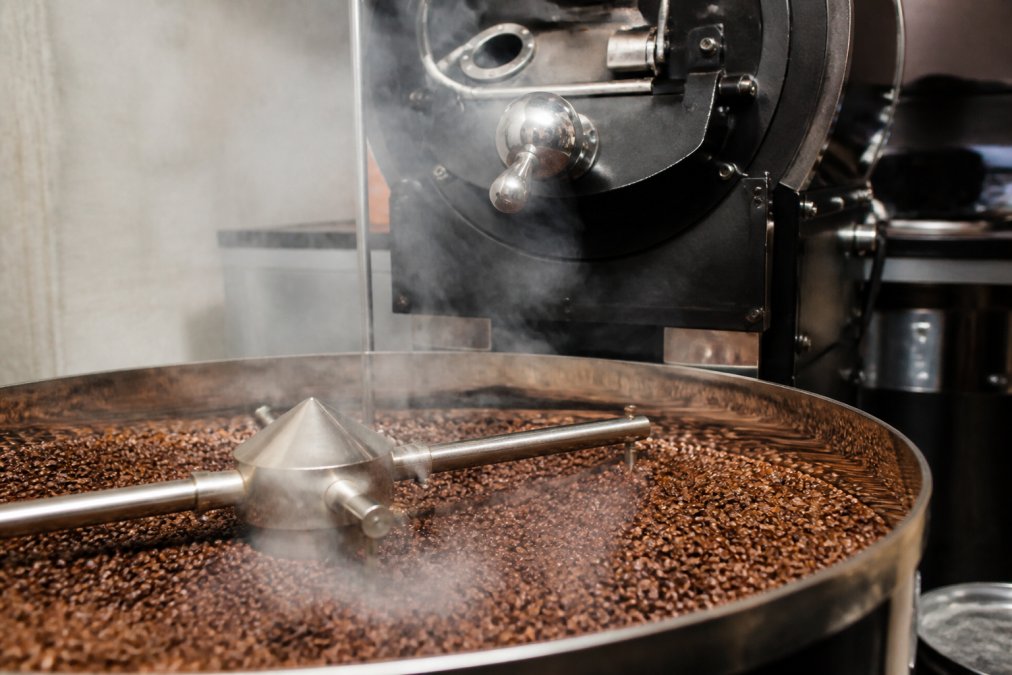
The roasting process creates what's called the "first crack", an audible pop when internal pressure forces the bean to expand. Roasters pull beans at different points relative to this crack to achieve different flavor profiles. Pull early, you get bright acidity and fruity notes. Pull later, you get deeper chocolate and caramel notes. This level of control simply doesn't exist in industrial roasting, where thousands of pounds move through massive drums on fixed timers.
Industrial roasting prioritizes speed and consistency, not flavor nuance. Beans spend the minimum time needed to reach a target color, then they're cooled rapidly. The result is uniform but flat. Artisanal roasters spend 12-18 minutes in the drum, monitoring temperature curves and making real-time adjustments based on how the beans are developing.
The difference shows up in your cup. A well-executed artisanal roast has balance, acidity that's bright without being sharp, body that's full without being heavy. You can taste the origin. Our Brazil Santos Coffee, for example, shows cocoa notes and smoothness because the roast was timed to highlight those characteristics rather than override them.

Ethical Sourcing in the Coffee Industry: What You're Actually Paying For
When you buy artisanal coffee, a meaningful portion of your money goes directly to the farmers who grew the beans. Fair trade and direct trade models ensure farmers receive prices that actually cover their costs and support their families, rather than the commodity price set by global markets, which often leaves farmers in poverty.
Ethical sourcing also means transparency. You should know the farm name, the region, the altitude, and the processing method. Our Colombia coffee comes from smallholder farmers in Medellín, grown at 1,300-1,500 meters on volcanic loam soil. That specificity isn't marketing theater, it's accountability. When you can name the farm, you can verify the practices.
Supermarket coffee rarely has this traceability. It's usually a blend of beans from multiple origins and multiple years, mixed together to hit a price point. You have no idea if the farmers were paid fairly or if the beans were grown using sustainable practices.
The sustainability angle matters too. Ethical sourcing often involves shade-grown coffee, which preserves forest canopy and supports biodiversity. It means avoiding monoculture plantations that deplete soil and require heavy pesticide use. These practices cost more upfront, but they protect the long-term viability of coffee-growing regions.
When you buy from Righteous Roast, you're funding a supply chain designed to be fair to producers and sustainable for the land. That's not a premium you're paying for marketing, it's a structural difference in how the coffee reaches your hands.
Freshness and Bean Quality: The Scientific Markers That Matter
Bean quality starts with the seed itself. Specialty coffee uses Arabica varieties grown at higher altitudes, where slower ripening concentrates sugars and acids that become flavor. Lower-quality coffee often uses Robusta beans, which are cheaper to grow but taste harsh and flat.
Brazil Santos Coffee Single Origin →
Freshness is measured by roast date. Coffee begins losing flavor immediately after roasting because volatile aromatic compounds oxidize when exposed to oxygen. Within two weeks, you've lost noticeable complexity. After a month, the coffee is stale by specialty standards. This is why artisanal roasters stamp the roast date on every bag, it's a promise of freshness.
Single-origin coffees are fresher than blends because they're roasted to order in smaller quantities. When you order from Righteous Roast, the beans roasted for your order are typically shipped within days. Supermarket coffee has no roast date, and if it did, it would likely show it was roasted months ago.
The grind consistency also matters for extraction. Whole bean coffee stays fresher longer because grinding increases surface area and accelerates oxidation. Grinding at home just before brewing is ideal. Pre-ground coffee oxidizes during storage and loses flavor before you even brew it.
Water content is another quality marker. Specialty coffee is dried to 10-12% moisture, which preserves flavor compounds. Over-dried beans become brittle and lose nuance. Under-dried beans can develop mold. This precision in processing is another reason artisanal coffee costs more, it requires skill and care, not just volume.
What Is the 15-15-15 Rule for Coffee and Why It Matters
The 15-15-15 rule is a practical guide for maximizing coffee freshness and flavor: consume within 15 days of the roast date, grind 15 minutes before brewing, and brew with water between 195-205°F (roughly 15 seconds after boiling). This rule exists because each step protects the volatile compounds that create flavor.
Consuming within 15 days keeps you in the window where aromatic complexity is still present. After 15 days, the coffee is still drinkable, but you're tasting less of what the roaster intended. Grinding 15 minutes before brewing minimizes oxidation, the longer ground coffee sits, the more flavor you lose to air exposure. And brewing at the right temperature ensures proper extraction without scorching the grounds.
This rule reveals why artisanal coffee requires more intention than supermarket coffee. You can't buy it weeks in advance and expect the same result. You can't grind it the night before.
Cost-Benefit Analysis: Is the Premium Price Justified
Artisanal coffee typically costs more than supermarket coffee. The question is whether the quality difference justifies the cost.
| Factor | Supermarket Coffee | Artisanal Coffee |
|---|---|---|
| Price per bag | $8-$12 | $18-$24 |
| Cost per cup | ~$0.50 | ~$0.92 |
| Roast date | Usually unknown | Always dated |
| Flavor complexity | Flat, one-note | Layered, nuanced |
| Freshness window | Weeks to months | Days to weeks |
| Waste rate | High (stale before use) | Low (consumed fresh) |
| Equipment needed | Standard drip machine | Burr grinder recommended |
Reducing Waste and Getting the Most From Your Purchase
Artisanal coffee is expensive enough that waste becomes a real concern. Here's how to maximize every bag. First, buy whole bean and grind at home just before brewing. Pre-ground coffee oxidizes during storage, and you'll taste the difference immediately. A burr grinder is a one-time investment that pays for itself in preserved flavor.
Conclusion
Is artisanal coffee worth it? The answer depends on what you value. If coffee is just fuel and you don't care about flavor, supermarket coffee is rational. If you drink coffee every day and actually taste it, artisanal coffee is one of the best values in your budget. The difference between a flat, stale cup and a fresh, complex cup is transformative.
Frequently Asked Questions
What is the 15-15-15 rule for coffee?
The 15-15-15 rule is a freshness guideline for artisanal coffee: use beans within 15 days of the roast date for optimal flavor, grind within 15 minutes of brewing, and brew with water at 195-205°F. This rule ensures you extract the full sensory profile, bright acidity, complex flavor notes, and clean mouthfeel, that specialty coffee roasters work to preserve. Supermarket coffee, often months old, cannot meet these standards.
How does artisanal coffee differ from mass-produced supermarket coffee?
Artisanal coffee is small-batch roasted to order, often single-origin with traceable supply chains and fair trade practices. Specialty roasters use drum roasting to develop complex flavor notes like cocoa, fruit, and honey. Supermarket coffee is commodity-grade, bulk-roasted weeks or months before sale, often blended from multiple origins to mask inconsistency. Artisanal coffee prioritizes craftsmanship and freshness; commercial coffee prioritizes shelf stability and cost.
Why does artisanal coffee cost more, and is it worth the price?
You pay for bean quality (higher altitude, better soil, selective harvesting), ethical sourcing that ensures fair wages, and the roaster's expertise. The value lies in reduced waste (fresher beans stay flavorful longer), superior flavor that requires less added cream or sugar, and support for sustainable farming practices.
How can I tell if a bag of coffee is truly specialty grade?
Look for these markers: a specific roast date (not a vague 'packaged by' date), single-origin designation with region and altitude details, tasting notes (cocoa, fruit, honey), and processing method listed. Specialty coffee often includes grower information and fair trade or direct trade certification. Righteous Roast's single-origin coffees, like Brazil Santos or Colombia Medellín, display all these details, showing transparency in sourcing and craftsmanship. Avoid bags with generic blends, missing roast dates, or vague origin information.