

Table of Contents
- Why Coffee Sourcing Claims Are Hard to Verify
- Coffee Certification Labels Explained: What Each Seal Actually Means
- Fair Trade vs Direct Trade Coffee: Key Differences and Red Flags
- The Greenwashing Audit: A 7-Point Checklist for Reading Coffee Bags
- How to Identify Living-Wage Compensation and Farmer-Paid Prices
- Best Organic Coffee Bean Brands and What Makes Them Credible
- How Climate Change Is Reshaping Ethical Sourcing
- Frequently Asked Questions
Last Updated: September 16, 2026
Why Coffee Sourcing Claims Are Hard to Verify
Learning how to tell if coffee is ethically sourced starts with an uncomfortable fact: the industry has a verification problem, and most bags on the shelf do not solve it. Coffee passes through growers, cooperatives, exporters, importers, and roasters before reaching your kitchen, and at every handoff information can be lost, softened, or invented.
Coffee Certification Labels Explained: What Each Seal Actually Means
Certification labels are third-party verification systems. An independent body audits farms and supply chains against a published standard, then licenses the seal to compliant products.
How Certification Audits Actually Work
Most coffee certifications operate on one of three models:
- Annual announced audits. The farm knows roughly when the inspector is coming. Cheaper, more common, easier to game.
- Unannounced or semi-announced audits. The certifier shows up without warning or with a short window. More expensive, harder to fake, typically reserved for higher-tier or risk-flagged operations.
- Chain-of-custody audits. The certifier traces a specific lot from farm to roaster, verifying certified green coffee was not swapped for uncertified beans. This matters most for a bag claiming a single origin.
A seal tells you the standard was met at some point in the chain, not which audit model was used, how often, or whether your specific beans were audited. That is why the strongest roasters pair a seal with lot-level traceability.
Fair Trade, Rainforest Alliance, and USDA Organic Compared
Fair Trade focuses on economic terms: a published minimum price, a social premium paid on top of the commodity price, and democratic cooperative structures. The minimum is a floor, not a living-wage guarantee, it keeps farmers above a crisis threshold rather than funding reinvestment. The social premium is a separate per-pound payment cooperatives vote on how to spend, often on schools, clinics, or processing equipment.
| Certification | Primary Focus | Farmer Pay Guarantee | Environmental Standard | Audit Model |
|---|---|---|---|---|
| Fair Trade | Economic equity | Minimum price + social premium | Moderate | Announced + chain-of-custody |
| Rainforest Alliance | Environmental stewardship + labor | Limited (no price floor) | Strong | Announced, risk-based |
| USDA Organic | Production inputs | None | Input-focused | Announced, annual |
| Direct Trade (uncertified) | Relationship-based | Varies by roaster | Varies by roaster | None, self-reported |
Where Each Certification's Scope Ends
Each seal answers a different question:
- Fair Trade answers: Was the farmer paid at least a published floor, and did the cooperative structure meet governance rules?
- Rainforest Alliance answers: Were environmental and worker-safety practices on the farm consistent with the standard?
- USDA Organic answers: Were prohibited synthetic inputs kept out of production?
None answers all three. A triple-sealed bag is stronger than a single-sealed one, but even it does not guarantee a living wage, because no major certification sets its floor at living-income level.
Fair Trade vs Direct Trade Coffee: Key Differences and Red Flags
The Fair Trade vs direct trade coffee debate comes down to one question: who verifies the claim? Fair Trade uses independent third-party certification. Direct trade is a relationship model where roasters buy straight from producers, often at higher prices, but with no universal standard and no outside auditor.
The Direct Trade Verification Problem
"Direct trade" is not a protected term, anyone can print it. There is no certifying body, minimum price, audit requirement, or penalty for misuse. A roaster buying commodity coffee through a broker can call its product direct trade if it visited one farm once.
The Greenwashing Audit: A 7-Point Checklist for Reading Coffee Bags
Greenwashing means making environmental or ethical claims that sound meaningful but lack verification, and coffee packaging is a prime habitat for it.
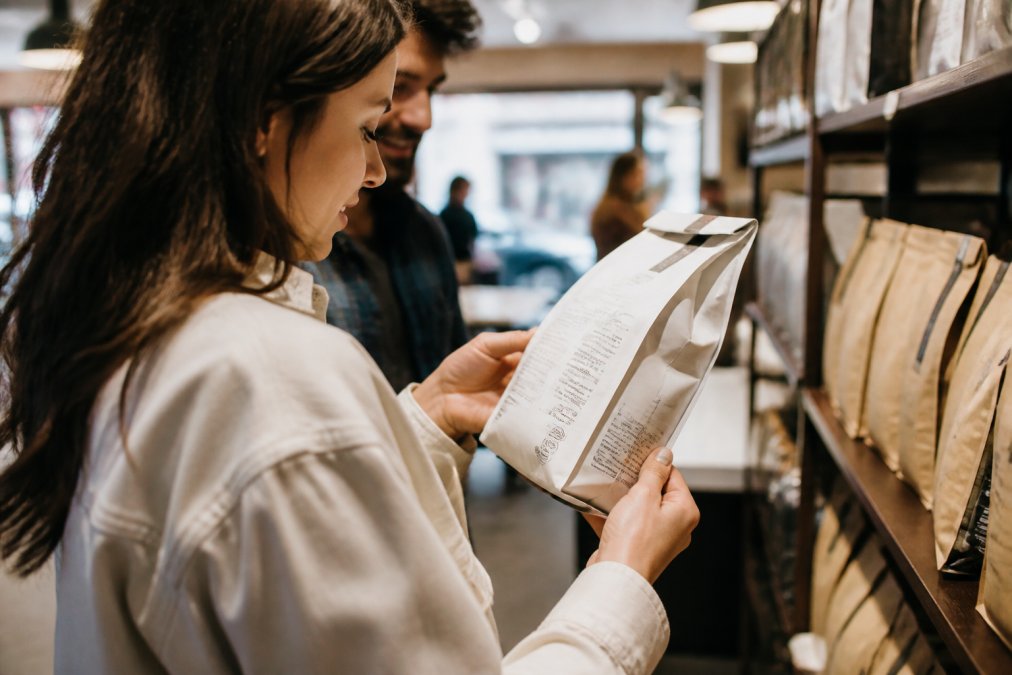
Run this audit before you buy:
- Is there a third-party certification seal? Look for Fair Trade, Rainforest Alliance, or USDA Organic. Vague leaf and globe icons designed in-house do not count.
- Is the origin specific? "Ethiopia, Yirgacheffe, Konga washing station" is verifiable. "Blend of fine coffees" is not.
- Is the farmer or cooperative named? Named producers can be checked. Anonymous ones cannot.
- Are prices or premiums disclosed? Look for language like "paid above the commodity benchmark" or a stated premium. Silence is a red flag.
- Is the roast date printed? A roast date signals operational transparency. A "best by" date does not.
- Does the roaster publish a sourcing report? Companies doing the work usually document it. Check their website, not just the bag.
- Does the claim match the certification? A bag labeled USDA Organic making wage claims is overreaching. Organic covers farming inputs, not labor.
How to Identify Living-Wage Compensation and Farmer-Paid Prices
Living-wage verification is the hardest part of ethical sourcing because most certifications guarantee minimums, not living incomes. A price floor keeps farmers above a crisis threshold; a living wage covers housing, food, education, and healthcare in that region. No major certification sets its floor at living-income level, so the burden of proof falls on the roaster, and on you to know what to look for.
Why Price Floors Are Not Living Wages
Fair Trade's minimum price is set per pound of green coffee and adjusted periodically. It covers the cost of sustainable production, not the cost of a household, the gap between the two is the difference between a farmer breaking even and a farmer's child finishing school.
The Four Signals That Actually Hold Up
1. Published farmgate prices. Some roasters publish the exact price paid per pound alongside the commodity market price for the same harvest. The gap is the ethical premium, the single most verifiable signal available, because it is a number, not a claim. Look for it on the roaster's website under a sourcing, transparency, or impact page, not on the bag.
How to Run a Living-Wage Comparison
You do not need to be an economist to sanity-check a claim. A three-step comparison:
- Find the roaster's published farmgate price for a specific lot, if it exists.
- Find the commodity benchmark for the same harvest period. The commodity market price is publicly reported and widely available.
- Compare the two. A meaningful ethical premium shows up as a clear gap, not a rounding difference. If the roaster publishes a price but not the benchmark, the number is unanchored.
The Verification Gap No One Talks About
Even published prices can mislead if they are averaged across a cooperative, reported at the export stage rather than the farmgate, or quoted in a currency that obscures the real premium. The strongest disclosures specify the lot, the harvest, the farmgate price, and the benchmark; anything less is a partial picture.
Best Organic Coffee Bean Brands and What Makes Them Credible
When people search for the best organic coffee bean brands, they usually mean brands they can trust, not just brands with "organic" on the bag. Credibility comes from four signals: valid certification, origin-specific traceability, disclosed sourcing practices, and freshness transparency.
How Climate Change Is Reshaping Ethical Sourcing
Climate change is rewriting what ethical sourcing means. Arabica is sensitive to temperature shifts, unpredictable rainfall, and pests moving into higher elevations, and as growing regions shift, smallholders carry the highest risk with the fewest resources to adapt.
- Investing in climate resilience, such as shade-grown systems and drought-resistant varietals
- Multi-year purchasing commitments that let farmers plan beyond one season
- Supporting farmer training programs on water management and soil health
- Protecting biodiversity as a buffer against crop failure
Frequently Asked Questions
What certifications should I look for on coffee bags?
Look for third-party certification labels like Fair Trade Certified, USDA Organic, and Rainforest Alliance. Each verifies different standards: Fair Trade focuses on farmer-paid prices and cooperative structures, USDA Organic covers sustainable farming and biodiversity, and Rainforest Alliance addresses environmental stewardship and labor conditions. No single label covers everything, so combining two or more gives a clearer picture of ethically sourced coffee.
What is the difference between Fair Trade and direct trade coffee?
Fair Trade uses third-party certification to set minimum farmer-paid prices and requires cooperative organization. Direct trade skips formal certification and relies on roaster accountability, where roasters negotiate directly with smallholder farmers. Direct trade can offer higher premiums and better traceability, but without independent verification, the direct trade verification problem means claims are harder to confirm. Fair Trade offers auditable standards; direct trade offers flexibility and potentially stronger relationships. Both can support economic equity when the roaster is transparent about pricing and origin-specific details.
Can I trust organic labels as an indicator of ethical sourcing?
Organic certification, such as USDA Organic, verifies sustainable farming practices, no synthetic pesticides, and biodiversity protection. It does not guarantee living-wage compensation or fair labor conditions. A coffee can be organic but still involve exploitative harvesting practices. For a fuller picture, pair organic certification with Fair Trade or a roaster that publishes supply chain transparency data, including farmer-paid prices and cooperative partnerships. Organic is one piece of the puzzle, not the whole story.
How can I verify a roaster's ethical sourcing claims beyond the label?
Check the roaster's website for supply chain transparency: named farms, cooperatives, or regions of origin, plus details on price transparency and premium pricing above commodity coffee rates. Look for annual impact reports or third-party supply chain audits. If a roaster claims direct trade but provides no farmer names, harvest details, or verification method, treat it as a red flag. You can also contact the roaster directly and ask how they verify labor conditions and environmental stewardship at origin. Transparent brands answer these questions openly.
The challenge is straightforward: most coffee packaging is designed to look ethical, not to prove it. Righteous Roast was built to close that gap, with ethically sourced and fair trade products, small batch roasting for freshness, transparent sourcing practices, and curated sample sizes so you can taste before you commit. Every order ships free within the United States. Get started with Righteous Roast and taste the difference transparency makes in your cup.